How to Reduce Freight Shipping Costs: 14 Strategies That Actually Work
Freight is one of the largest controllable costs on a shipper's P&L, and most of the waste hides in plain sight. Here are 14 strategies that move the number, ranked by how much leverage they actually give you.
Cutting freight costs is rarely about beating up a carrier on rate. The biggest savings come from eliminating the avoidable costs that quietly inflate invoices, the wrong mode, a misdeclared freight class, an accessorial nobody flagged, a truck sitting in detention. Fix those, and most shippers trim 8 to 20% off their freight spend before a single rate is renegotiated.
This is the playbook we walk shippers through, 14 strategies grouped into the four levers that actually move the number: picking the right mode, controlling the variables that inflate invoices, buying smarter, and operating with better data. They're ordered roughly by leverage, so start at the top.
The cheapest freight invoice isn't the one with the lowest rate. It's the one with no avoidable mistakes on it.
Lever 1: Get the mode and equipment right
Mode selection is the highest-leverage decision in freight, and it's the one shippers get wrong most often. Defaulting to whatever you used last time can cost you thousands a year on a single recurring lane.
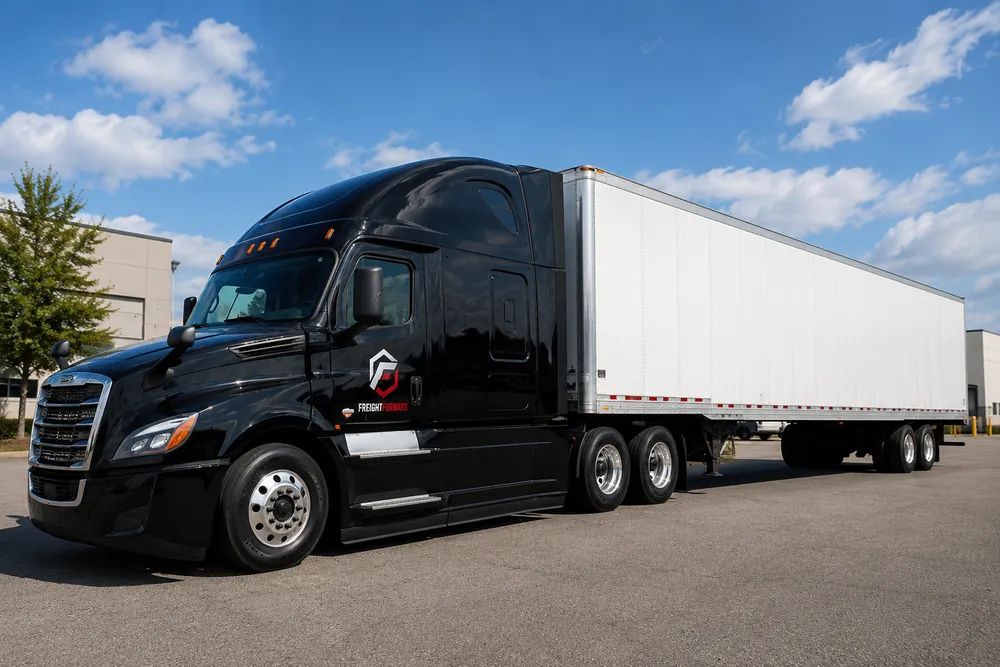
1. Match the mode to the shipment size
The three core modes price completely differently, and the crossover points are where money leaks. LTL (less-than-truckload) is cheapest for roughly 1 to 6 pallets because you only pay for the linear feet you occupy. Partial truckload covers the awkward middle, about 5,000 to 20,000 lbs, where LTL classification fees start to bite but you don't need a whole trailer. Full truckload wins past 6 to 12 pallets, or whenever the freight is fragile, high-value, or time-critical. If you're not sure where your shipment falls, read our breakdown of LTL vs FTL and where the breakpoint sits.
2. Right-size the equipment
Paying for a 53-foot dry van when a 26-foot box truck or a sprinter would do is pure waste. The same applies on the open-deck side: a step deck or conestoga can carry a load that a flatbed would need an oversized permit for. Equipment that's matched to the load avoids both wasted capacity and the permit-and-escort costs of forcing freight onto the wrong trailer.
3. Put long hauls on intermodal
For non-urgent freight on lanes over roughly 700 miles, intermodal rail can undercut over-the-road truckload meaningfully, rail's cost-per-mile advantage compounds over distance. You trade a day or two of transit for a lower rate and a smaller carbon footprint. On consistent, high-volume long lanes, it's one of the largest structural savings available.
Lever 2: Control the variables that inflate invoices
This is where the quote-to-invoice gap comes from. None of these are about rate, they're about disclosing and controlling the details that trigger surprise charges.
4. Get your freight class and dimensions exactly right
On LTL, the single most common surprise charge is reclassification: you declare a class, the carrier reweighs and remeasures in transit, finds it doesn't match, and bills the difference plus a penalty. Accurate dimensions and density up front are the cheapest insurance in freight. Our guide to freight class and NMFC codes walks through how density determines your class and how to avoid the reclass trap.
5. Disclose every accessorial up front
Liftgate, residential, inside delivery, limited access, appointment scheduling, each adds $50 to $300 per stop, and they're only "surprises" when they're discovered at delivery instead of at quote time. The shippers who come in under budget aren't the ones who argue accessorials off invoices; they're the ones who disclose every requirement before the truck is dispatched. See our full accessorial charges guide for the complete list and typical costs.
6. Kill detention with dock discipline
Detention, the per-hour fee a carrier charges when a driver waits past the free window (usually two hours), is the most expensive accessorial when it stacks up. A six-hour wait can add $500 to one invoice and, worse, it makes carriers quote your lanes higher next time because your facility has a reputation. Tightening appointment windows, staging freight before the truck arrives, and loading promptly is free money.
7. Optimize packaging and density
Because LTL is priced on density and parcel on dimensional weight, how you pack directly sets your rate. Stackable, palletized, tightly packed freight classes lower and ships cheaper than the same goods loose or in oversized boxes. Shaving an inch of pallet height or making a load stackable can drop you into a lower freight class, a permanent, recurring saving on every shipment.
Lever 3: Buy smarter

8. Consolidate shipments
Two LTL shipments going to the same region this week are often cheaper combined into one partial or full truckload. Consolidating orders, by holding a day for a fuller load, or pooling shipments headed the same direction, reduces the per-unit cost and the number of handlings (which also lowers damage risk). It's the simplest volume play available to a small shipper.
9. Be flexible on pickup and delivery dates
Freight rates are a live market. A pickup that can flex by a day or two lets a broker place your load on a truck that's already heading your direction, a backhaul or a repositioning move, at a materially lower rate than a hard same-day requirement. Rigid timing is one of the most expensive things you can ask for; flexibility is one of the cheapest things you can offer.
10. Build lane density and dedicated lanes
Carriers price predictability. Consistent volume on the same lane lets you (or your broker) set up dedicated capacity with locked rates that beat booking spot freight every week. The more repeatable your freight looks to a carrier, the lower the rate they'll commit to, because you're reducing their empty miles and their uncertainty.
11. Use spot and contract pricing deliberately
Spot rates win when capacity is loose and you can shop the load; contract rates win when you need guaranteed capacity and budget certainty on recurring lanes. Most shippers should run a blend, contract the predictable core volume, spot the overflow and the one-offs. Putting everything on spot exposes you to market spikes; putting everything on contract leaves savings on the table when the market softens.
12. Understand how fuel surcharges actually work
The fuel surcharge is a percentage of the linehaul (typically 20 to 35%) that moves with diesel prices. You can't negotiate diesel away, but because the surcharge is a percentage of the base rate, every dollar you cut from the linehaul cuts the surcharge with it. That's why mode, density, and miles matter twice: they lower the base and the percentage stacked on top.
Lever 4: Operate like a pro

13. Use data and visibility
You can't cut what you don't measure. Tracking your lanes, carriers, accessorial frequency, and on-time performance reveals exactly where the spend is leaking, which facilities rack up detention, which lanes are overpriced, which modes are misassigned. Real-time shipment tracking and clean documentation (start with an accurate bill of lading) turn a pile of invoices into a cost-reduction roadmap.
14. Work with a broker who has real leverage
A broker who moves volume across thousands of carriers holds rates an individual shipper rarely matches on the spot market, and, just as important, catches the classification, accessorial, and mode errors before they hit your invoice. The brokerage margin is real, but for most small and mid-size shippers it's smaller than the cost of buying freight alone and absorbing the avoidable mistakes.
A 10-minute freight cost audit
You don't need a consultant to find the waste. Pull your last 20 invoices and run this checklist:
- Mode check: Flag every shipment of 7 to 12 pallets that moved as LTL. Re-quote them as partial truckload.
- Reclass check: Count how many invoices have a reclassification or reweigh fee. Any at all means your declared dimensions are off.
- Accessorial check: Total your accessorials. If detention and liftgate are recurring, they're fixable with dock discipline and upfront disclosure.
- Lane check: Find your top 5 lanes by volume. Those are your candidates for dedicated, locked-rate capacity.
- Flexibility check: Note how many were hard same-day pickups. Each one likely paid a premium that flexibility would have avoided.
Quick reference: which lever to pull
| If your problem is… | Pull this lever | Typical impact |
|---|---|---|
| Invoices don't match quotes | Accurate class + accessorial disclosure | High |
| Mid-size shipments feel overpriced | Move LTL → partial truckload | High |
| Long-haul lanes are expensive | Shift to intermodal rail | High |
| Recurring lanes, volatile rates | Dedicated / contract capacity | Medium |
| Frequent detention fees | Dock & appointment discipline | Medium |
| Freight classes too high | Packaging & density optimization | Medium |
| No idea where money goes | Tracking, data & a broker review | Foundational |
The bottom line
Reducing freight cost isn't a negotiation tactic, it's an operating discipline. Match the mode to the shipment, declare freight accurately, disclose accessorials before dispatch, consolidate and flex where you can, and measure everything. The shippers who consistently come in under budget aren't the ones with the toughest rate negotiators; they're the ones who stopped paying for avoidable mistakes. That's where the 8 to 20% lives.
Frequently asked questions
How much can a shipper realistically save on freight?
Most shippers who tighten up mode selection, freight classification, packaging, and accessorial disclosure trim 8 to 20% off their annual freight spend without renegotiating a single rate. The savings come from eliminating avoidable costs, reclassification penalties, detention, the wrong mode, rather than squeezing carriers. Larger structural moves like lane consolidation or shifting long hauls to intermodal can push total savings higher.
Does using a freight broker actually lower costs?
A good broker lowers your landed cost in two ways: buying power and avoided mistakes. Brokers move volume across thousands of carriers, so they hold rates an individual shipper can rarely match on the spot market, and they catch the classification, accessorial, and mode errors that quietly inflate invoices. The brokerage margin is real, but for most small and mid-size shippers it is smaller than the cost of doing it alone.
What is the single biggest hidden freight cost?
Detention and reclassification are the two most common surprise charges. Detention, the per-hour fee when a driver waits beyond the free window to load or unload, can add hundreds of dollars to a single invoice. On LTL, reclassification (when the carrier reweighs and remeasures your freight and finds it does not match the class you declared) is the most frequent cause of an invoice that does not match the quote.
Is LTL or full truckload cheaper?
It depends on volume. LTL (less-than-truckload) is cheaper for roughly 1 to 6 pallets because you only pay for the space you use. Once you are past about 6 to 12 pallets, or the freight is fragile, high-value, or time-sensitive, full truckload often wins because there is no terminal handling and the rate is flat for the whole trailer. Partial truckload fills the gap in between.
How do fuel surcharges work, and can they be reduced?
A fuel surcharge is a percentage added to the base linehaul rate that rises and falls with diesel prices, typically in the 20 to 35% range. You cannot negotiate diesel prices away, but you can reduce the dollar impact by lowering the linehaul itself (better mode, denser freight, fewer miles through smarter lane planning) since the surcharge is calculated as a percentage of it.
Get a Live Freight Rate in 2 Minutes
No account required. Live freight pricing from one of America's most established freight networks.
Get an Instant Rate